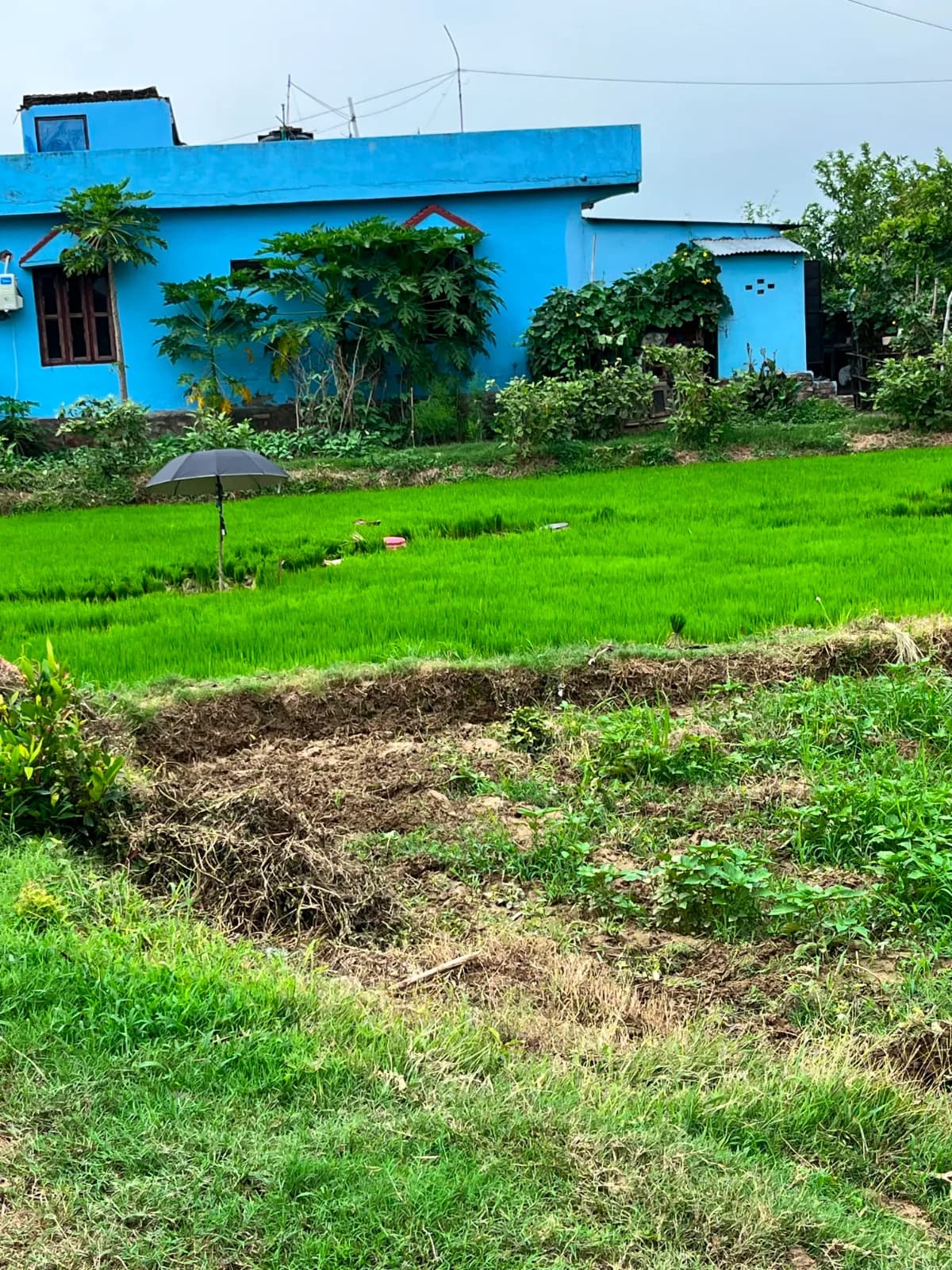
“Lush green paddy fields improve air quality, absorb carbon dioxide, release oxygen, and support a healthier, more sustainable environment.”
Green Roots, Fresh Air
The vibrant green paddy field in this image reflects the vital role agriculture plays in protecting both livelihoods and the environment.
Beyond producing food, healthy rice fields help absorb carbon dioxide, release oxygen, reduce dust, and support local biodiversity, contributing to cleaner air and a healthier ecosystem. As urban expansion, deforestation, and air pollution continue to threaten environmental quality, preserving agricultural landscapes has become increasingly important.
Green fields act as natural carbon sinks, helping regulate local temperatures and improve air quality while strengthening climate resilience. Protecting farmland through sustainable agricultural practices is an investment in both food security and environmental health.
Every thriving paddy field represents a step toward cleaner air, healthier communities, and a more sustainable future for generations to come.
Contributor
@nischalgyawali36-da041b52
Badge
Community Air Protector
Continue browsing
Related memories
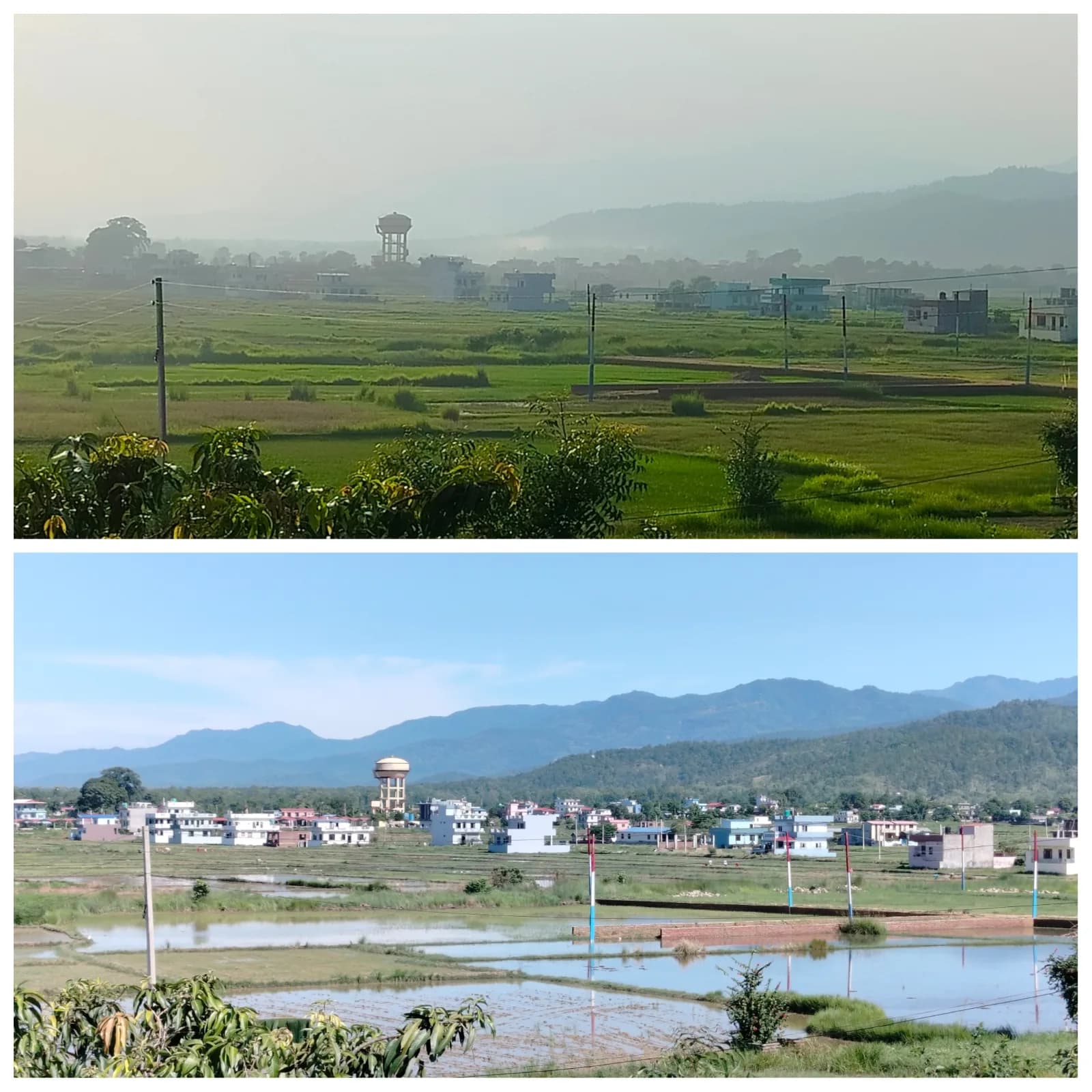
Nature is Healing
"The Rain Effect: The AQI of Sainamaina Dropped to 46 From 165. Massive Relief!!"
This two images of Sainamaina represents the massive change in air because of rainfall. The upper image, which I have already uploaded in Safahawa with the caption as "Rain Couldn'

a quiet road
"A quiet road flanked by trees, where clean air and dappled sunlight slow the city’s pace."
A lone road stretches into the morning light, empty of cars, each side framed by a row of tall trees whose leaves murmur like quiet guardians. The air here tastes of green — cool,

A village without pollution
"a village does not need an air purifier for clean air"
Anshu woke each morning to cool, clear air after the village stopped open burning and switched to clean stoves and composting. Children played without coughing, the river ran clear
