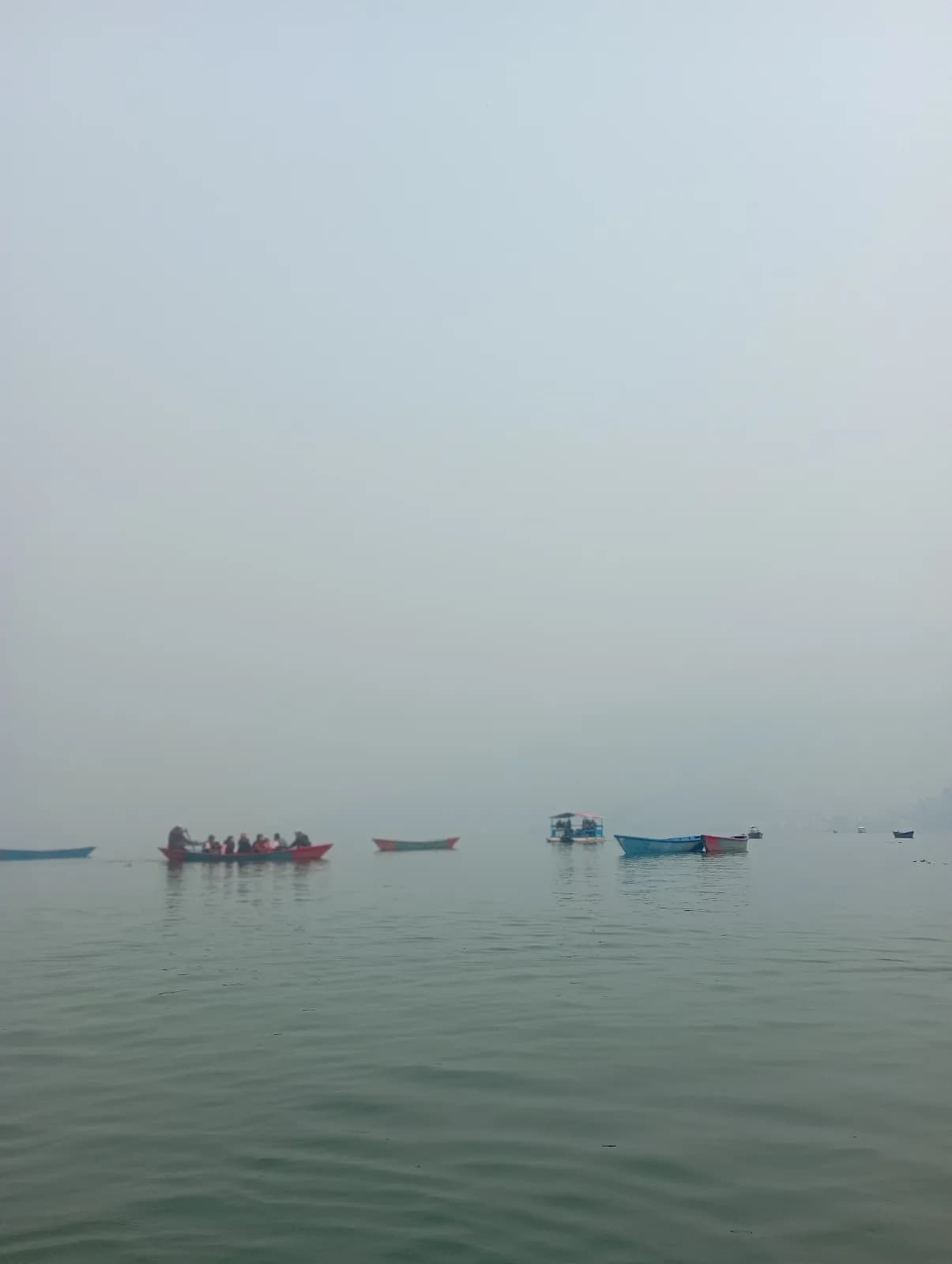
“When the horizon blurs, what remains of Pokhara?”
Pokhara is fading
Pokhara is considered as a city of escape.
A place where thousands of travelers come for clear views, calm water, and the panorama view of the mountain range from the city.
However, the reality of Pokhara I experienced slightly changed my perspective on this image. Boating on Phewa Lake, I could see the horizon of the lake merging with the muted shade of grey sky making it difficult to notice where one ends and the other begins. Mountain ranges like Annapurna and Machhapuchhre that are usually visible during clear days were absent, hiding behind the soft haze of air pollution. This was not just a result of seasonal weather or cloudy sky.
The presence of air pollutants in that atmosphere resulted in water, sky, and mountains slowly blending into one continuous haze.
There I realised that pollution was not just affecting the air I was breathing, but also threatening the natural beauty I had come to witness. The question remains: Would Pokhara still feel like a tourist’s paradise if the landscapes continue to fade behind the layers of air pollution?
Contributor
@panthipurnima
Badge
SafaHawa Guardian
Continue browsing
Related memories
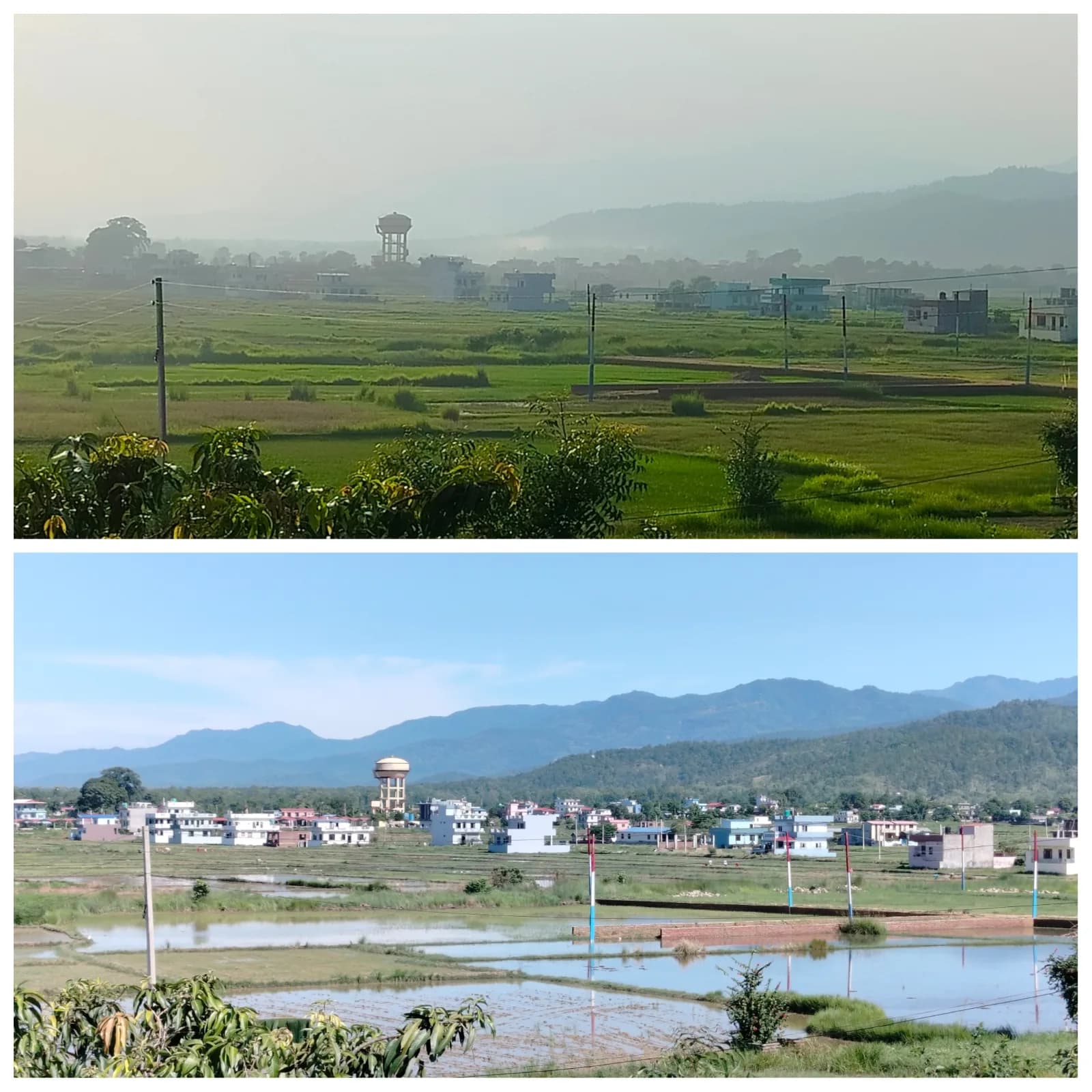
Nature is Healing
"The Rain Effect: The AQI of Sainamaina Dropped to 46 From 165. Massive Relief!!"
This two images of Sainamaina represents the massive change in air because of rainfall. The upper image, which I have already uploaded in Safahawa with the caption as "Rain Couldn'
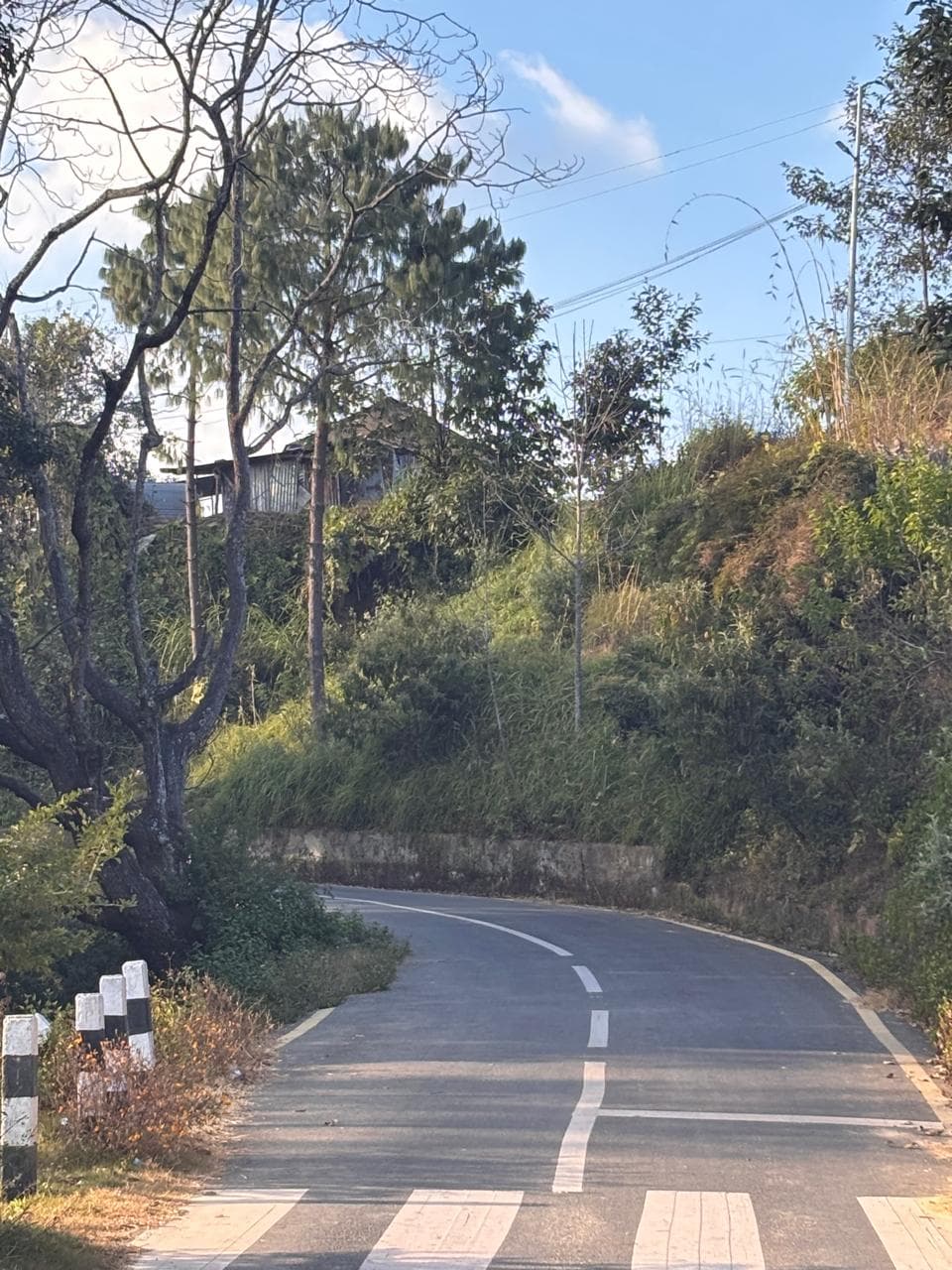
a quiet road
"A quiet road flanked by trees, where clean air and dappled sunlight slow the city’s pace."
A lone road stretches into the morning light, empty of cars, each side framed by a row of tall trees whose leaves murmur like quiet guardians. The air here tastes of green — cool,
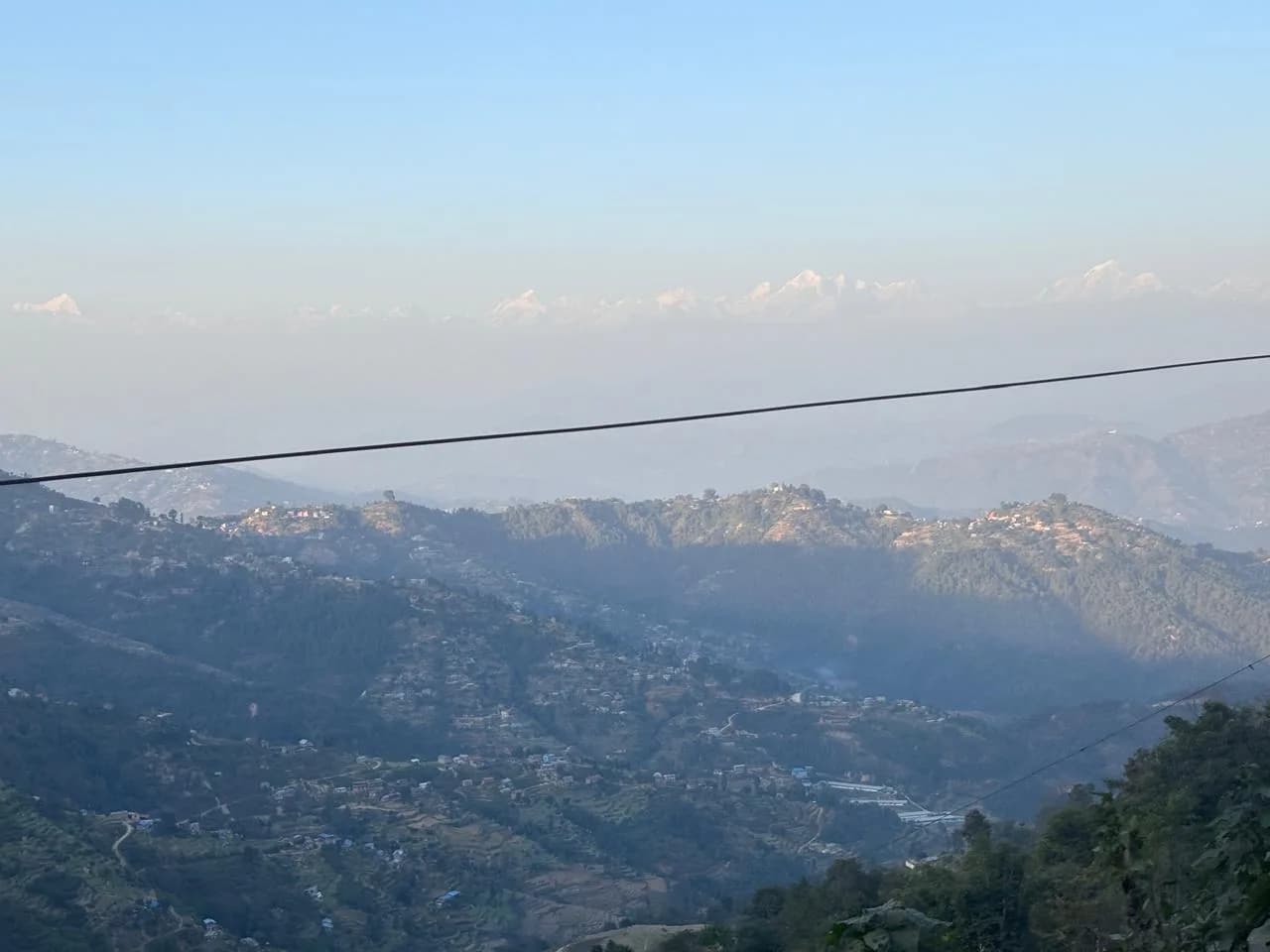
A village without pollution
"a village does not need an air purifier for clean air"
Anshu woke each morning to cool, clear air after the village stopped open burning and switched to clean stoves and composting. Children played without coughing, the river ran clear
